Dental Implants vs Dentures What You Need to Know
Outline:
– Definitions and how each option works, including typical steps and timelines.
– Daily experience: comfort, chewing power, speech, taste, and confidence in social settings.
– Oral health and longevity: bone preservation, gum health, success rates, and common risks.
– Cost and upkeep: initial fees, maintenance, relines, repairs, and long-term value.
– Decision framework: candidacy, lifestyle, medical factors, and questions to ask your clinician.
Introduction: Choosing between dental implants and dentures matters for more than looks. Your bite strength, nutrition, speech clarity, self-confidence, and long-term oral health all ride on this decision. While both solutions can restore a complete smile, they do so in different ways, with distinct trade-offs in procedure time, maintenance, and cost. The goal of this guide is to help you compare those trade-offs clearly so you can move forward with a plan that fits your mouth, your budget, and your life.
Dental Implants and Dentures: What They Are and How They Work
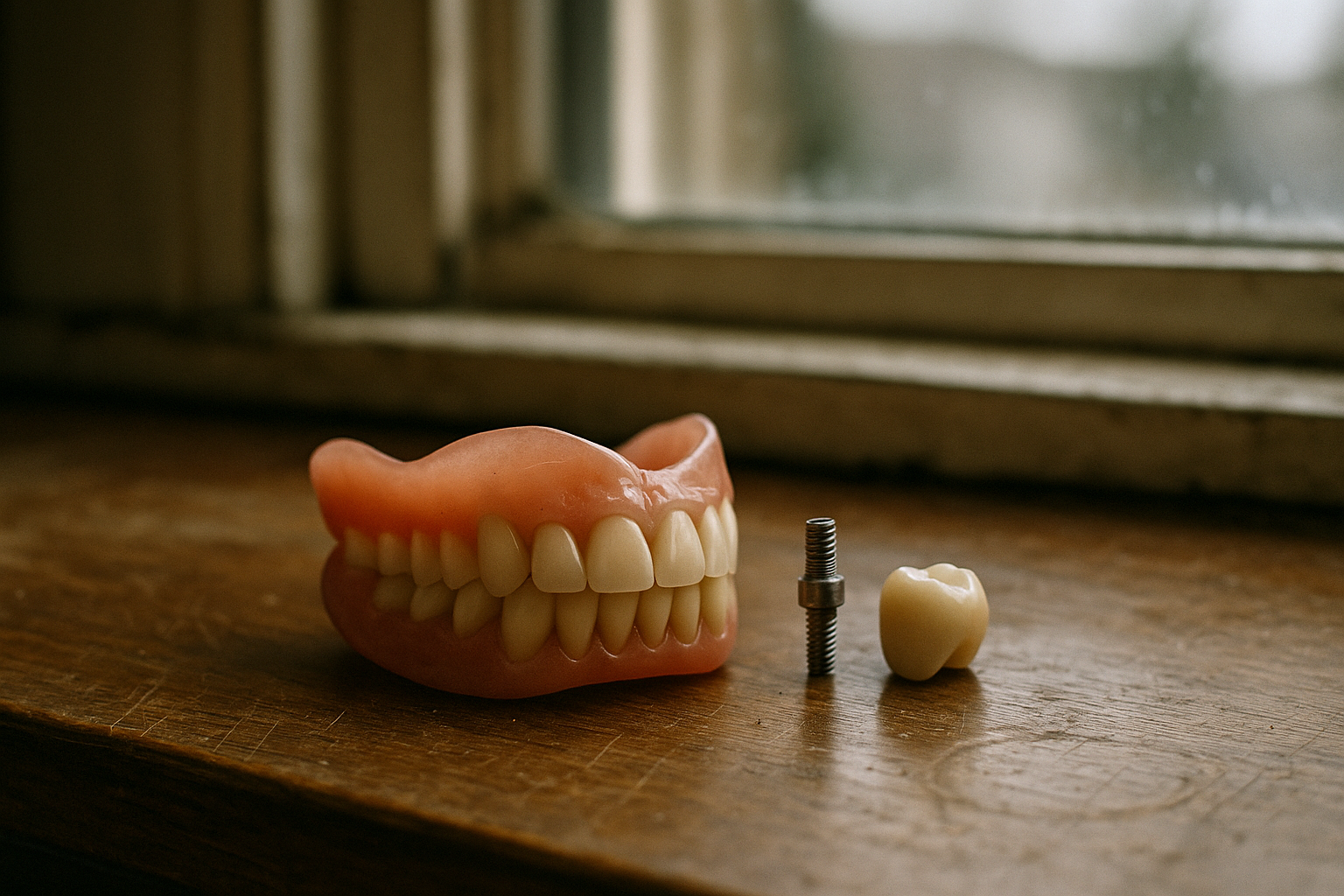
Dental implants and dentures both aim to replace missing teeth, but they do it with very different engineering. An implant is a small post, commonly titanium or ceramic, placed into the jawbone where it serves as an artificial tooth root. Over several weeks to months, bone cells grow around the post in a process called osseointegration, creating a stable anchor. A custom abutment and crown are then attached to restore form and function. Implants can replace a single tooth, support a bridge spanning several teeth, or stabilize a full-arch prosthesis.
Dentures are removable prostheses that rest on gums and, in some cases, clip to remaining teeth or implant attachments. Full dentures replace an entire arch, while partial dentures fill in gaps around existing natural teeth. Most feature acrylic bases shaped and tinted to mimic gum tissue, with teeth crafted from acrylic or porcelain. They are fabricated from impressions and bite records taken by your clinician, refined through try-ins, and finalized in a dental lab.
Procedure timelines and steps differ. Implants typically involve diagnostics (photos, impressions, and 3D imaging), planning, placement under local anesthesia, healing, and then restoration. When bone is thin or sinus spaces are low in the upper jaw, grafting may be recommended to build volume before or during placement. Many patients wear a temporary tooth or provisional bridge during healing; final crowns or bridges follow once integration is confirmed. By contrast, dentures can be delivered more quickly, sometimes immediately after extractions as a provisional set, with adjustments and relines to refine the fit as gums remodel.
Key contrasts to keep in mind:
– Implants become part of your bite force pathway by anchoring in bone.
– Dentures rely on gum support, saliva suction, and sometimes adhesives or clasps.
– Implants are fixed or snap-in; dentures are removable by design.
– Lab work, visits, and healing timelines vary; implants usually require more steps up front, while dentures are faster initially but need periodic refitting.
In short, implants aim to emulate natural roots and deliver a stable, long-term foundation, whereas dentures prioritize non-surgical speed and affordability, with fit and retention managed over time as tissues change.
Day-to-Day Experience: Comfort, Chewing, Speech, and Taste
How you feel at the dinner table and in conversation often decides whether implants or dentures suit you. Because implants are anchored to bone, they tend to feel more like natural teeth once healed. The absence of a plate over the palate (for upper fixed options) preserves taste and temperature sensations. Chewing efficiency with implant-supported teeth is frequently reported at a higher fraction of natural dentition, while conventional dentures typically provide less force and more movement during tougher bites.
With conventional dentures, comfort can vary. A well-made pair can sit smoothly on the gums, but the fit is dynamic—gums and bone remodel, so what feels secure this year may need adjustment the next. Adhesives can help with minor looseness, but they add a step to the morning and evening routine. Upper dentures often cover the palate to improve suction, which can slightly dampen taste and alter mouthfeel. Lower dentures are notorious for mobility because the tongue and floor-of-mouth anatomy compete for space.
Chewing and diet considerations:
– Implants typically allow firmer foods to return to the menu sooner after final restoration.
– Dentures may encourage smaller bites and softer textures, particularly during adaptation.
– Fibrous foods (think apples or leafy salads) can be challenging with loose dentures; implants usually handle them with greater stability.
– Hot and cold sensitivity can feel more natural with fixed implant restorations that leave the palate uncovered.
Speech and social confidence also matter. Many people adapt quickly to implants, noticing little difference from natural teeth. Dentures require practice to pronounce certain sounds (like “s,” “t,” and “d”) without clicking or lifting, and minor adjustments can help. Saliva flow often increases temporarily with new dentures, and sore spots are common early on until polished away. Over time, many denture wearers become skillful and comfortable, but some still plan meals and outings with adhesive on hand. If the prospect of a removable device gives you pause, an implant solution—fixed or snap-in—may align better with your expectations for spontaneity and ease.
Bottom line for daily life: implants tend to reduce compromises in eating, speaking, and tasting, while dentures ask for adaptation and periodic fine-tuning. The trade-off is that implants require surgery and patience during healing, whereas dentures deliver a faster path to a complete smile, with ongoing adjustments as part of the deal.
Health and Longevity: Bone, Gums, Success Rates, and Risks
Tooth roots stimulate jawbone through everyday chewing. When teeth are lost, the surrounding bone gradually thins in a natural remodeling process. Implants restore a measure of that stimulation because they transmit force into bone, which can help preserve volume in treated areas. Dentures, by contrast, sit on top of gums and cannot replace the mechanical stimulus of roots. Over years, the ridge beneath a denture can shrink, which contributes to looseness and the need for relines.
Success and longevity metrics are a helpful guide. Published data commonly report implant success rates around 90–95% at 10 years for healthy, well-maintained cases, with variations based on site, bone quality, bite forces, and personal habits. Dentures do not “fail” in the same way because they are not integrated with bone; instead, they wear, stain, or loosen as tissues change. Many full dentures last about 5–7 years before replacement is considered, though careful users may extend that window with relines and repairs.
Risks exist with both choices. With implants, early failures can occur if the site does not integrate, and late complications can include screw loosening, chipped porcelain, or peri-implantitis (inflammatory bone loss). Contributing factors may include a history of gum disease, smoking, poorly controlled diabetes, inadequate home care, or heavy bite forces. With dentures, common issues include sore spots, fungal irritation under the base, diminished chewing strength, and reduced confidence during laughter, coughing, or yawning if retention is marginal.
Hygiene and maintenance recommendations:
– Implants: twice-daily brushing, interdental brushes or floss alternatives, and regular professional cleanings with implant-safe instruments.
– Dentures: daily brushing of the prosthesis, overnight soaking in cleanser unless directed otherwise, and gentle gum and tongue brushing to reduce plaque and odor.
– For both: consistent checkups to monitor fit, bite balance, and tissue health.
Nutritional and systemic health considerations also play a role. More stable chewing can support a more varied diet, which benefits overall wellness. Conversely, difficulty processing crunchy vegetables or proteins may nudge some denture wearers toward softer, more processed foods. If you prioritize bone preservation, bite strength, and reduced long-term tissue changes, implants have a structural advantage; if you want to avoid surgery or manage medical conditions that complicate healing, dentures remain a reliable, noninvasive alternative.
Cost, Maintenance, and Total Value Over Time
Costs vary widely by region, materials, and the complexity of your case, but understanding the ranges helps frame expectations. A single-tooth implant with its custom abutment and crown often falls within a few thousand dollars per site. When multiple teeth are missing, costs rise with the number of implants, the type of restoration (individual crowns, bridges, or full-arch solutions), and any additional procedures such as bone grafting or sinus elevation. Dentures generally carry a lower initial fee per arch, with economy, standard, and premium tiers reflecting differences in fit, materials, and aesthetics.
Maintenance costs accumulate differently. Implants may have higher upfront costs but can provide long service life when cared for properly. Possible later expenses include replacing worn crowns or addressing a chipped veneer, and regular hygiene visits are essential. Dentures may require relines every few years as the ridge remodels, occasional repairs for cracks or tooth fractures, and eventual replacement. Cleansers, adhesives, and storage solutions add small but recurring costs for removable options.
Thinking in terms of total value:
– Short term: dentures offer a faster, lower-cost route to a complete smile.
– Medium term: implant restorations can reduce daily compromises, often improving efficiency at meals and confidence during conversation.
– Long term: while implants require an initial investment, their stability may reduce the frequency of major remakes compared with multiple denture replacements.
Insurance coverage and financing differ. Some plans contribute to part of an implant crown or denture, while others set annual maximums that only cover a portion of the work. Pre-authorization and a written treatment estimate help avoid surprises. If you are deciding purely on price, dentures usually win the opening round. If you weigh comfort, function, and longevity alongside dollars, implants often compare favorably over a longer horizon—provided your health and anatomy allow them.
A practical approach: request itemized quotes for both paths, including any expected grafting, temporary teeth, relines, and follow-up visits. Ask for a 5–10 year outlook of likely maintenance. When you compare side by side, it becomes easier to see which option delivers the balance of affordability and everyday quality that fits your priorities.
Who Should Choose What? A Practical Decision Framework
There is no single solution for every smile, so match the choice to your health, anatomy, timeline, and lifestyle. If you value a fixed, natural-feeling bite and can commit to surgery, healing time, and diligent home care, implants are often among the most satisfying options. If you prefer to avoid surgery, need teeth quickly after extractions, or have medical factors that complicate healing, dentures provide a dependable, removable alternative.
Consider these factors as a checklist:
– Health: well-controlled diabetes, nonsmoking status, and good oral hygiene favor implant success; certain medications or conditions may require additional planning.
– Bone volume: adequate height and width support stable implants; thin ridges might call for grafting or modified designs.
– Budget and timing: dentures usually cost less up front and deliver teeth sooner; implants can offer strong long-term value if you can invest time and resources.
– Tolerance for maintenance: implants require meticulous cleaning around posts; dentures need daily care and periodic relines.
– Personal preference: some people want a fixed solution that feels “set-and-forget,” while others are comfortable with a removable device they can clean outside the mouth.
Questions to bring to your consultation:
– What are my specific anatomical limitations, and how would they change your plan?
– How many visits and how much healing time should I expect?
– If I choose dentures now, could I convert to implant support later, and what would that entail?
– What maintenance should I budget for over five years?
– What outcomes can I reasonably expect based on my medical history and habits?
Think of this decision like choosing the right pair of hiking boots for a long trail. One path offers a sturdy, semi-permanent fit that handles rough terrain with confidence once broken in. The other is lighter and quicker to put on, though it may require stops to adjust the laces along the way. Either can get you there; the right choice depends on your feet, your route, and how you like to travel. With a clear plan, realistic expectations, and regular checkups, both implants and dentures can deliver a healthy, attractive smile that fits your everyday life.
Conclusion: Bringing Clarity to a Personal Choice
Replacing missing teeth is a personal decision shaped by comfort, health, time, and resources. Implants tend to provide stable chewing, preserved bone, and a fixed feel once healed, while dentures offer a quicker, lower-cost route with removable convenience and ongoing adjustments. Weigh your priorities, seek a comprehensive exam, and compare written plans that outline procedures, timelines, and maintenance. With good information and a clinician you trust, you can choose a solution that complements your goals and supports lasting oral health.


